Drones reshape African military strategies amid sovereignty and dependency debates
Drones have rapidly become indispensable tools in African military strategies. A recent analysis highlights a profound transformation in the continent’s conflict dynamics. While this “dronisation” enhances operational capabilities for states, it also reveals a heavy technological dependence on foreign powers and raises critical questions about security, governance, and civilian protection.
From surveillance to frontline assets: the evolving role of drones
Initially deployed for surveillance and intelligence missions, drones now occupy a central position in African security strategies. Their rapid adoption reflects a fundamental shift in warfare across the continent, where both state forces and non-state armed groups are increasingly integrating these technologies into their operations.
The pace of drone acquisitions has accelerated dramatically over the past two decades. From a single recorded drone purchase agreement in Africa in 2001, the number surged to 21 in 2021. Between 1980 and 2024, over 1,500 military drones were acquired by 31 African countries, with a notable surge between 2020 and 2023. North Africa accounts for more than half of these acquisitions, while Nigeria stands out as one of the continent’s top buyers.
Technology as a response to escalating security threats
This surge in drone integration primarily responds to the deteriorating security environment across the continent. Facing armed groups and internal conflicts, African states increasingly rely on drones for surveillance, intelligence gathering, and precision strikes—all while reducing risks to deployed troops.
Conflicts in Sudan, Mali, Burkina Faso, Niger, Somalia, and Ethiopia exemplify this trend. Drones have become essential instruments in military operations, serving both combat and communication roles. They are now used by national armies and armed groups alike, often as tools for psychological warfare and propaganda.
Non-state actors adopt drone warfare
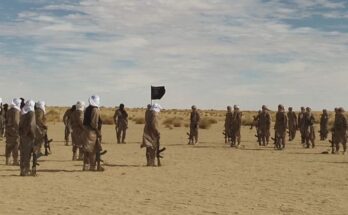
One of the most significant developments is the democratization of drone technology. Commercially available civilian drones are being repurposed as weapons by groups such as Boko Haram, Al-Shabaab, and the Group for Support of Islam and Muslims (JNIM). This shift dramatically alters power dynamics on the battlefield.
Drones are no longer limited to observation—they now enable targeted strikes, coordination of ground operations, and dissemination of footage to amplify the psychological impact of military actions. Their proliferation has intensified violence in several conflict zones.
Foreign suppliers dominate Africa’s drone market
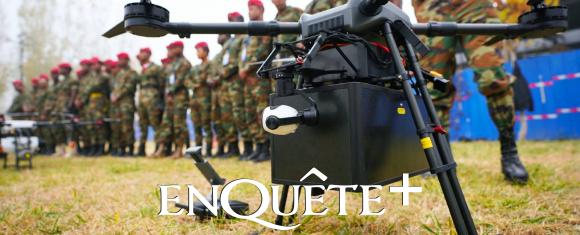
Despite their growing presence, African states remain heavily reliant on foreign suppliers. China, Israel, the United States, and increasingly Turkey dominate the African drone market. Beyond sales, these partners provide critical support, including training, maintenance, software updates, and spare parts—creating enduring strategic dependencies.
This reliance also raises concerns about digital sovereignty and the protection of data collected by these systems. Addressing these challenges requires more than technological adoption; it demands robust regulatory frameworks and strategic autonomy.
Africa’s push for local drone production
Faced with these dependencies, several African nations are investing in domestic drone production. South Africa leads the continent’s industrial efforts, while Morocco is developing a hybrid strategy combining local manufacturing with international partnerships. Nigeria, Egypt, Ethiopia, Tunisia, and Algeria are also advancing their industrial capabilities.
Senegal is emerging as a key player through Ndobine, a company specializing in drones for maritime surveillance, mapping, and precision agriculture. However, local production still represents only about 12% of Africa’s drone market.
Tactical gains without strategic solutions
Despite their growing importance, drones are not a panacea for Africa’s conflicts. While they enhance military capabilities and alter combat tactics, they do not address the root causes of crises. In some cases, their proliferation has fueled violence. In 2024 alone, 484 drone strikes resulted in 1,176 civilian deaths across 13 African countries. In Sudan, nearly 700 civilians were reportedly killed in the first three months of 2026 due to drone strikes.
Experts emphasize that drones alone cannot resolve conflicts. The focus must shift toward developing public policies that govern their use. Recommendations include aligning operational doctrines with international humanitarian law, enhancing operator training, improving acquisition transparency, fostering local industries, and harmonizing regulations under the African Union’s framework.
The path forward: mastering drone technology or risking greater dependency
The future of drone integration in Africa hinges on the continent’s ability to balance technological adoption with strategic autonomy. Without effective governance, the “dronisation” of African militaries risks deepening dependencies and exacerbating violence rather than consolidating long-term security.
For Africa to fully benefit from this technology, states must prioritize responsible use, local innovation, and continental cooperation—ensuring that drones serve as tools for stability rather than vectors of instability.