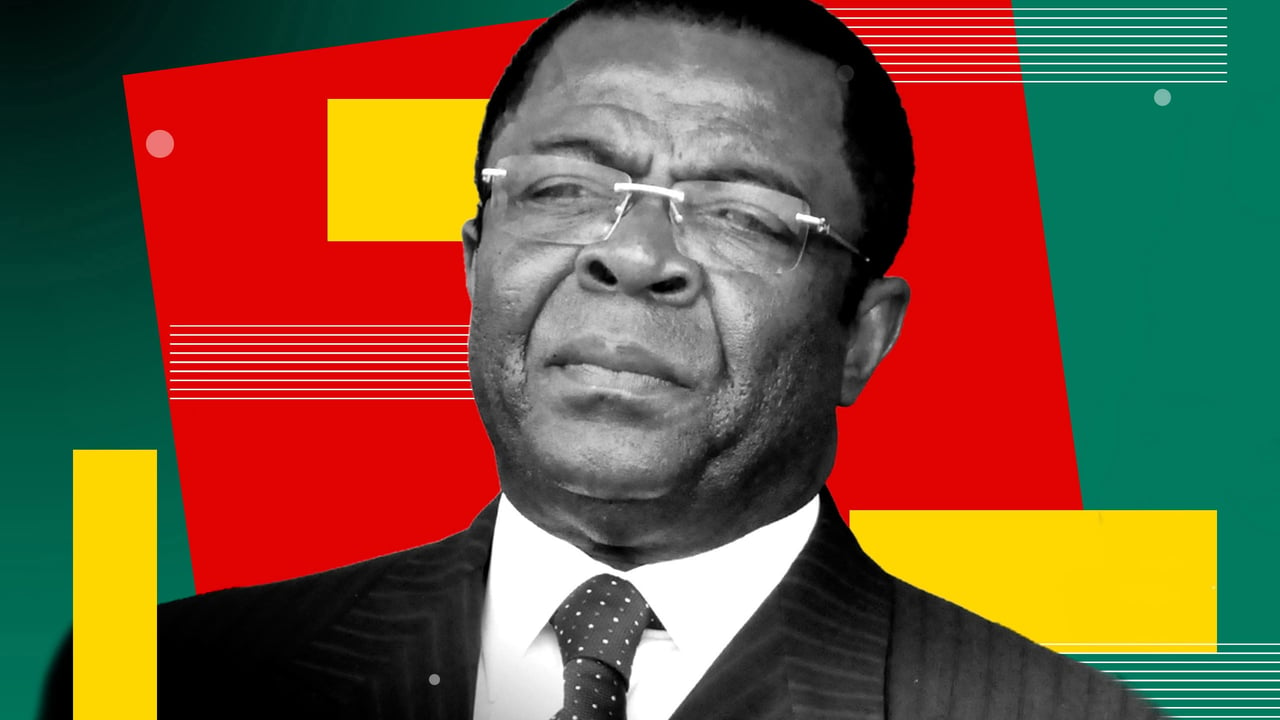
In the complex political chessboard of Cameroon, few careers have risen as spectacularly as that of Edgar Alain Mebe Ngo’o, only to collapse just as dramatically under the weight of President Paul Biya‘s ever-tightening grip on power.
The trajectory of this former security architect mirrors that of other prominent figures who once wielded significant influence within the corridors of Yaoundé, only to find themselves sidelined—or worse, stripped of their privileges and freedom. Mebe Ngo’o’s story is not just one of personal downfall but a stark reminder of how power in Cameroon operates behind closed doors.
The making of a security strongman
Edgar Alain Mebe Ngo’o carved his name in Cameroon’s political history through his unyielding control over the country’s security apparatus. Serving in key roles such as Minister of Defense and later Minister of Territorial Administration, he became synonymous with the regime’s iron-fisted approach to governance. His authority extended beyond mere policy enforcement; he was the face of a system that brooked no dissent, especially from those who dared to challenge the status quo.
Yet, the very power that elevated Mebe Ngo’o to the upper echelons of Cameroon’s political elite would eventually become the instrument of his undoing. His downfall was not a sudden event but the culmination of years of shifting loyalties and internal power struggles within the ruling circle.
A fall from grace: the unraveling
The first signs of trouble emerged when Mebe Ngo’o’s name surfaced in controversies tied to the management of Cameroon’s Anglophone crisis. As Minister of Territorial Administration, he was tasked with quelling the separatist uprising in the country’s English-speaking regions. However, his strategies—ranging from heavy-handed crackdowns to controversial security operations—failed to yield lasting results and instead deepened the crisis.
Critics argue that his inability to resolve the conflict exposed vulnerabilities within the regime, prompting Paul Biya to reconsider his loyalty. Rumors of his diminishing influence began circulating in political circles, with some insiders suggesting that the president’s inner circle had turned against him.
By the time Mebe Ngo’o was removed from his post, the move was widely seen as a calculated purge rather than a routine cabinet reshuffle. His departure sent shockwaves through Cameroon’s political landscape, signaling to other powerful figures that no one was beyond the reach of the president’s wrath.
The broader context: a pattern of disgraced elites
Mebe Ngo’o’s fate is not an isolated incident. Since Paul Biya assumed power in 1982, the Cameroonian presidency has systematically dismantled the careers of those who once stood at its helm. From former Prime Ministers to influential ministers, the list of disgraced elites reads like a who’s who of Cameroon’s political history.
Figures like Ephraïm Inoni, Jean-Marie Atangana Mebara, and Marafa Hamidou Yaya—once untouchable—now share a common fate: public disgrace and legal troubles. Their stories serve as cautionary tales, reinforcing the message that in Cameroon, power is transient, and loyalty to the president is the only currency that truly matters.
For Mebe Ngo’o, the fall from grace was swift and brutal. Once a feared enforcer of the regime, he now finds himself on the wrong side of the very system he helped build—a testament to the ruthless nature of Cameroon’s political landscape.