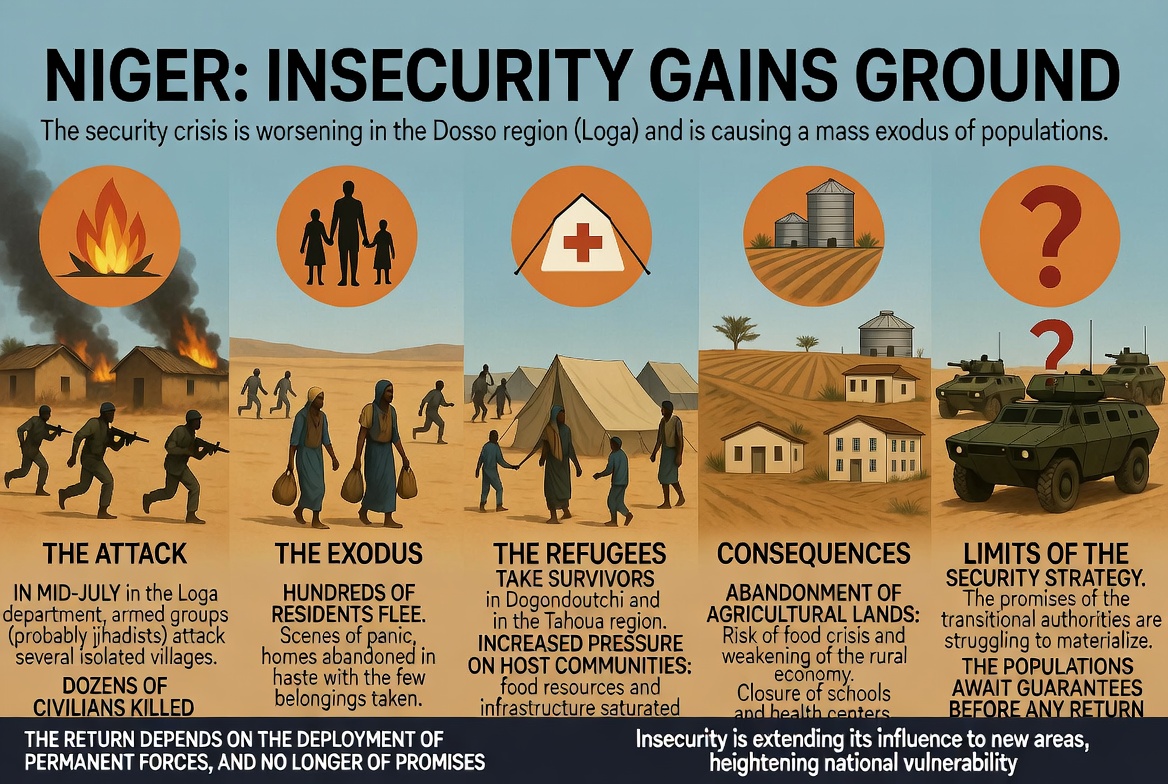
In the southern region of Niger, the security situation continues to deteriorate, with hundreds of residents fleeing their homes in the Loga area of Dosso following a series of deadly attacks in mid-July. The violence underscores a troubling trend: despite repeated assurances from military authorities, many communities remain vulnerable to armed incursions, leaving civilians to bear the brunt of the crisis.
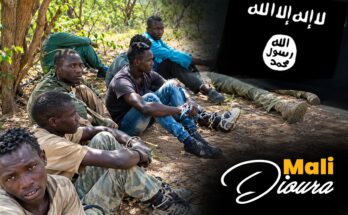
The assaults, attributed to jihadist factions operating in the region, resulted in multiple civilian casualties. Witnesses report that attackers targeted remote villages, exploiting gaps or weaknesses in the security apparatus to instill fear. Accounts describe frantic evacuations, abandoned homes, and families fleeing with only what they could carry.
Survivors have primarily sought refuge in Dogondoutchi and nearby areas of Tahoua, hoping for stronger protection. Yet their arrival strains already stretched resources, as host communities grapple with economic hardship, inadequate social infrastructure, and food shortages.
Military promises fall short amid persistent instability
The latest wave of displacement highlights the shortcomings of Niger’s security strategy under the transitional government. Since the political shift, restoring national security has been touted as the junta’s top priority. Nevertheless, attacks persist in border zones and interior regions alike, raising doubts about the effectiveness of military operations and troop redeployments.
The surge in internal displacement serves as a stark indicator of the conflict’s evolution. When families abandon their lands, farms, and livelihoods, it signals a eroding trust in the state’s ability to safeguard them. For these communities, return is no longer just about ceasefire—it requires tangible security guarantees.
Displaced communities demand concrete security measures
Nigerien authorities have pledged to bolster military presence in affected zones to facilitate returns. Yet skepticism lingers among residents, many of whom insist they will only return after seeing permanent security forces capable of preventing future attacks. Promises, they argue, no longer suffice in the face of recurring violence.
The conflict’s ripple effects extend beyond immediate safety concerns. The abandonment of farmland threatens upcoming harvests, deepening food insecurity and weakening already fragile rural economies. Schools close, health centers operate at reduced capacity, and local markets falter, leaving populations increasingly vulnerable.
Humanitarian strain grows as displacement surges
Displaced families urgently require food, clean water, medical care, and dignified shelter. Aid organizations warn that resources are stretched thin as the number of internally displaced persons continues to climb across the country.
The crisis is no longer confined to traditionally volatile regions. The spread of attacks into new areas amplifies fears that armed groups are capitalizing on security gaps to expand their influence.
For the people of Loga, the immediate priority remains securing basic safety before contemplating a return. Until those conditions are met, the exodus will likely persist, compounding the human, economic, and social toll on a nation grappling with an entrenched security crisis.