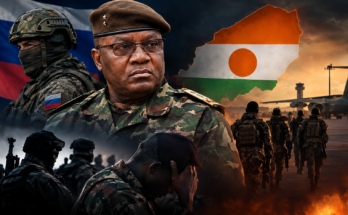
Two years after General Abdourahamane Tiani orchestrated the overthrow of democratically elected President Mohamed Bazoum, citing the imperative to restore national security, his regime now confronts a reality that significantly undermines its foundational narrative. The coup, executed on July 26, 2023, was presented as a decisive response to the civilian government’s perceived failure to contain the burgeoning influence of armed groups. However, recent developments suggest that the promised shift in strategy is clashing with a threat far more entrenched than mere changes in leadership or diplomatic reorientations.
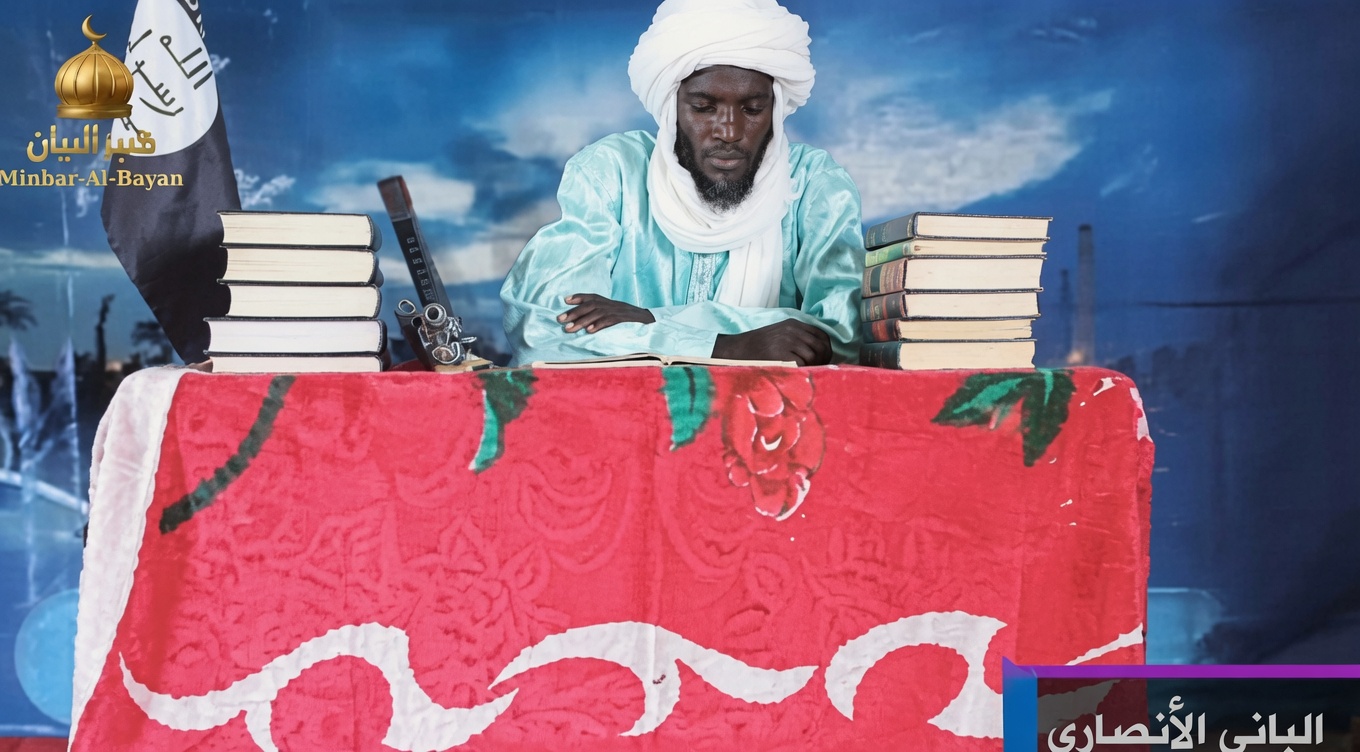
A recent video disseminated by Jama’at Nusrat al-Islam wal-Muslimin (JNIM), an Al-Qaïda affiliate operating in the Sahel, offers a particularly telling insight into this evolving dynamic. In a direct rebuttal to statements made by the junta’s leader, Sheikh Albani Al-Ansari not only challenges Niamey’s authority but starkly exposes the profoundly ideological nature of the conflict. His message conveys an unmistakable ultimatum: hostilities will persist as long as the Nigerien state operates under a republican constitution.
« If you abandon the Constitution to govern exclusively according to Sharia, the war between us will end. Otherwise, it will continue. »
This declaration illuminates a strategic misunderstanding that appears to have characterized the military’s ascent to power. General Tiani’s discourse has consistently emphasized national sovereignty, denouncing Western influence and portraying the departure of French forces as a crucial step towards reclaiming security. Yet, this geopolitical interpretation fundamentally diverges from the core objectives pursued by the jihadist organizations.
These groups do not primarily combat a foreign presence; rather, their opposition is directed at the very existence of the modern state, its institutions, its laws, and its republican model. Their overarching ambition is to supplant the existing constitutional order with a politico-religious framework. Consequently, the replacement of Western partners with new allies or a change in leadership within Niamey does nothing to alter their fundamental strategy.
This stark reality highlights the inherent limitations of a narrative that equated the security crisis with a simple consequence of diplomatic choices. Armed groups have never conditioned their violence on the military presence of France or the United States. They are driven by an ideological agenda that transcends international rivalries, focusing instead on territorial conquest, the systematic weakening of public authority, and a fundamental challenge to the state’s very foundations.
The junta’s strategy also banked on the premise that military governance would facilitate a more effective response, thanks to centralized decision-making and greater operational latitude for the armed forces. Nevertheless, despite the reorganizations implemented since 2023, attacks continue to plague numerous regions across the country. Jihadist groups consistently demonstrate remarkable adaptability, exploiting weakly administered territories, pre-existing communal tensions, and the persistent logistical hurdles faced by the Nigerien army.
Adding to this relentless security pressure is a substantial diplomatic and economic toll. The regional sanctions imposed in the wake of the coup, the deterioration of relations with several traditional partners, and the reduction in certain cooperative ventures have profoundly reshaped Niger’s strategic environment. While some of these measures have evolved over time, their lingering consequences continue to strain state financing capabilities, impede investment, and limit the resources available to sustain a prolonged war effort.
The pivot towards new partners, notably Russia and the other military regimes comprising the Alliance of Sahel States (AES), has allowed the junta to reinforce its sovereignist rhetoric. However, this diplomatic realignment has not yielded the rapid security improvements that were initially heralded. Populations residing in the most exposed zones continue to endure the constant threat of attacks, forced displacements, and the closure of essential public services, including schools and health centers.
The JNIM’s recent message now places the military leadership in a significant dilemma. General Tiani, by frequently invoking religious values in his political communications to bolster legitimacy among certain segments of the populace, likely aimed to diminish the extremist groups’ propaganda space. Instead, these groups are now skillfully turning this argument against him. For them, a mere reference to Islam is insufficient; only the complete and integral establishment of Sharia law is deemed acceptable. Any deviation from this stance renders the current regime a legitimate target.
The junta thus finds itself ensnared in an extraordinarily complex equation. Acceding to the demands articulated by the jihadist groups would necessitate abandoning the constitutional foundations of the Nigerien state and, in essence, questioning its very existence as a Republic. Rejecting these demands, conversely, commits the nation to a protracted, costly, and uncertain conflict against an adversary whose motivations are as deeply ideological as they are military.
This challenging situation offers a broader, crucial lesson for the entire Sahel region. The fight against jihadist organizations cannot be reduced solely to matters of national sovereignty or international alliances. It demands robust institutions, an effective state presence across the entirety of the territory, efficient regional cooperation, a comprehensive development strategy, and a nuanced response to the social and economic divisions that armed groups adeptly exploit for recruitment.
Ultimately, General Abdourahamane Tiani is discovering that orchestrating a change in government is infinitely simpler than fundamentally altering the entrenched dynamics of a conflict that has plagued the region for over a decade. By positioning sovereignty as the primary lever of his security strategy, he generated considerable expectations. Yet, jihadist groups are now unequivocally reminding him that their war targets not a foreign partner or a particular leader, but the very essence of the state itself. Until this profound reality is fully grasped and addressed, Niger risks remaining trapped in a conflict whose resolution appears increasingly distant and uncertain.