Gabon’s president pays homage in Yamoussoukro, strengthening ties with Côte d’Ivoire
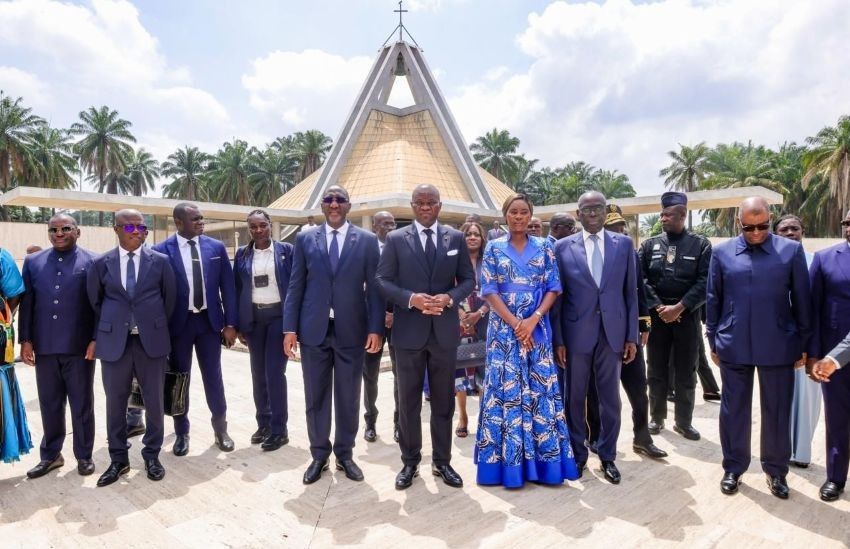
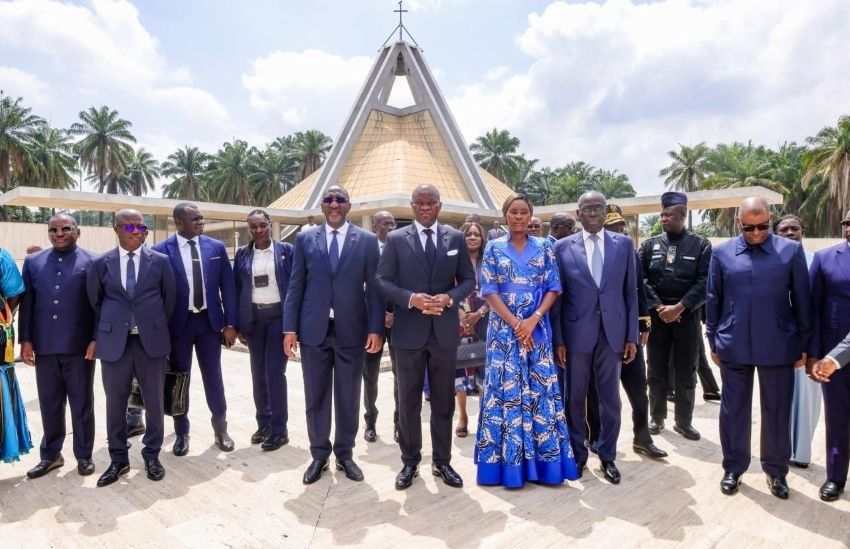
Libreville, August 6, 2026 – President Brice Clotaire Oligui Nguema’s visit to Yamoussoukro transcended the boundaries of a standard diplomatic mission. By paying respects at the tomb of Félix Houphouët-Boigny and visiting the Basilica of Our Lady of Peace, the Gabonese leader deliberately framed his stay in Côte d’Ivoire around themes of memory, peace, and historical ties between two nations eager to deepen their relationship.
Accompanied by First Lady Zita Oligui Nguema and a high-level Gabonese delegation, the president arrived in Yamoussoukro on August 5, where he was received by Ivorian administrative, political, and traditional authorities. This visit coincides with the eve of Côte d’Ivoire’s 66th Independence Day celebrations, to which Gabon was invited by President Alassane Ouattara.
The significance of Yamoussoukro was not lost on observers. The city houses the legacy of Félix Houphouët-Boigny, Côte d’Ivoire’s founding president and a towering figure in African history. By laying a wreath at the former leader’s mausoleum, Oligui Nguema honored a statesman remembered for his nation-building and peace-building legacy. The gesture also underscored the enduring bonds between Libreville and Abidjan, rooted in decades of diplomatic friendship, cooperation, and shared solidarity.
Honoring a legacy that resonates across Africa
At a meeting with Yamoussoukro’s traditional leadership, the Gabonese president emphasized the broader implications of this homage. Beyond the tribute to a single leader, the visit highlighted a vision of African governance—one that prioritizes long-term stability, preserves collective memory, and leverages peace as a cornerstone for progress.
This diplomatic overture aligns with Gabon’s broader strategy to strengthen ties across the continent. Oligui Nguema’s regional tour reflects a clear intent to forge stronger African alliances and position Gabon as a proactive advocate for continental cooperation.
The president also expressed gratitude to Alassane Ouattara for extending the invitation to Côte d’Ivoire’s national festivities. Gabon’s participation will carry both institutional and cultural weight. Senior Gabonese military officers trained in Côte d’Ivoire will join the celebrations, alongside a delegation representing the country’s indigenous communities. This gesture underscores Gabon’s rich diversity and its commitment to showcasing national unity on a continental stage.
From memory to a vision of shared prosperity
The second pivotal moment of the day unfolded at the Basilica of Our Lady of Peace. Constructed between 1986 and 1989 and modeled after St. Peter’s Basilica in Rome, the structure stands as one of Yamoussoukro’s most iconic landmarks. The Gabonese delegation toured the basilica before observing a moment of reflection.
In the guestbook, President Oligui Nguema penned a message calling for unity, dialogue, and solidarity among African peoples as pathways to a “strong and prosperous continent.” This theme wove together the day’s earlier homage to Houphouët-Boigny—a leader whose legacy is inseparable from peace—and the basilica, a symbol of faith, hope, and interfaith dialogue.
This approach reveals a diplomacy that goes beyond transactional agreements or economic accords. It is anchored in shared symbols, collective memory, and values that resonate deeply across borders, fostering people-to-people connections.
For both Libreville and Abidjan, the historical foundation of their relationship is undeniable. Yet the true challenge lies in translating this closeness into tangible outcomes across economic, diplomatic, cultural, security, and humanitarian spheres. The visit to Yamoussoukro serves as a bold political signal of that intent.
By honoring Houphouët-Boigny and, from the Basilica of Our Lady of Peace, urging an Africa united by brotherhood and solidarity, President Oligui Nguema spoke a language that transcends the occasion of Côte d’Ivoire’s national celebrations. The message is unequivocal: for Gabon, the relationship with Côte d’Ivoire is rooted in history, but it must now fuel a more ambitious, concrete, and forward-looking African cooperation.