UN warns of Daech’s expanding reach in Africa’s most volatile regions
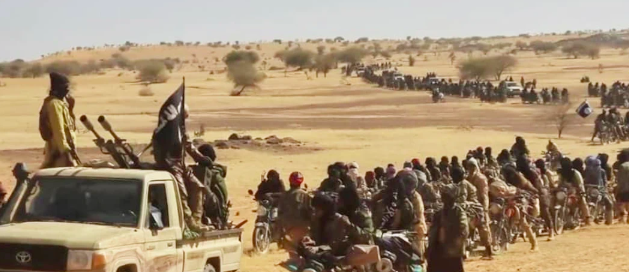
The United Nations has issued a stark warning about the heightened terror threat posed by the Islamic State (Daech) in Africa, particularly in the Sahel and around Lake Chad. In a newly released report submitted to the UN Security Council, the organization highlights how Daech’s regional branches are gaining autonomy while exploiting local vulnerabilities, despite the weakening of its central leadership.
This assessment comes from a comprehensive document presented by Oguljeren Niyazberdiyeva, a senior official at the United Nations Office of Counter-Terrorism (UNOCT). The report identifies the Sahel and Lake Chad Basin as the primary expansion zones for the group, which traces its roots back to the Arabic acronym Ad-Dawla al-Islamiya fil-Iraq wa-sh-Sham (Islamic State in Iraq and the Levant).
ISWAP remains Daech’s most active global affiliate
The report underscores that the Islamic State’s West Africa Province (ISWAP) remains the most operationally active branch of Daech worldwide. Military analysts note that the group is enhancing its combat capabilities by increasingly deploying commercial drones for surveillance and attack missions.
In neighboring conflict zones, affiliated factions in the Democratic Republic of Congo (DRC) and Mozambique continue their offensives despite sustained pressure from national and regional forces. These groups are simultaneously expanding their recruitment networks and deepening their local footholds.
‘Daech has fundamentally restructured its operations to survive sustained military campaigns. Despite international counter-terrorism efforts, the group continues to pose a severe threat to global peace and security,’ warned Oguljeren Niyazberdiyeva in remarks shared by UN information services.
Daech’s shift to a decentralized network
The UN report reveals that while counter-terrorism operations have weakened Daech’s central command and reduced its capacity to orchestrate large-scale international attacks, the group has transformed into a decentralized network of regional affiliates. These branches operate with greater independence, bound by a shared extremist ideology but adapting to local contexts.
This evolution allows Daech to exploit institutional weaknesses, prolonged conflicts, and economic instability to entrench itself further. The report emphasizes how the group leverages these conditions to sustain and expand its influence.
Exploiting technology to amplify terror capabilities
Another critical concern highlighted in the report is Daech’s growing use of advanced technology. The UN notes that the group is increasingly utilizing artificial intelligence, encrypted communications, digital platforms, virtual assets, and unmanned aerial vehicles (drones) to enhance its propaganda, recruitment, financing, and operational planning.
In response, the report calls for stronger international cooperation and closer collaboration with technology companies and private sectors to better regulate these emerging tools. However, it also acknowledges that when used responsibly, these same technologies can serve as powerful instruments for counter-terrorism efforts and safeguarding global security.