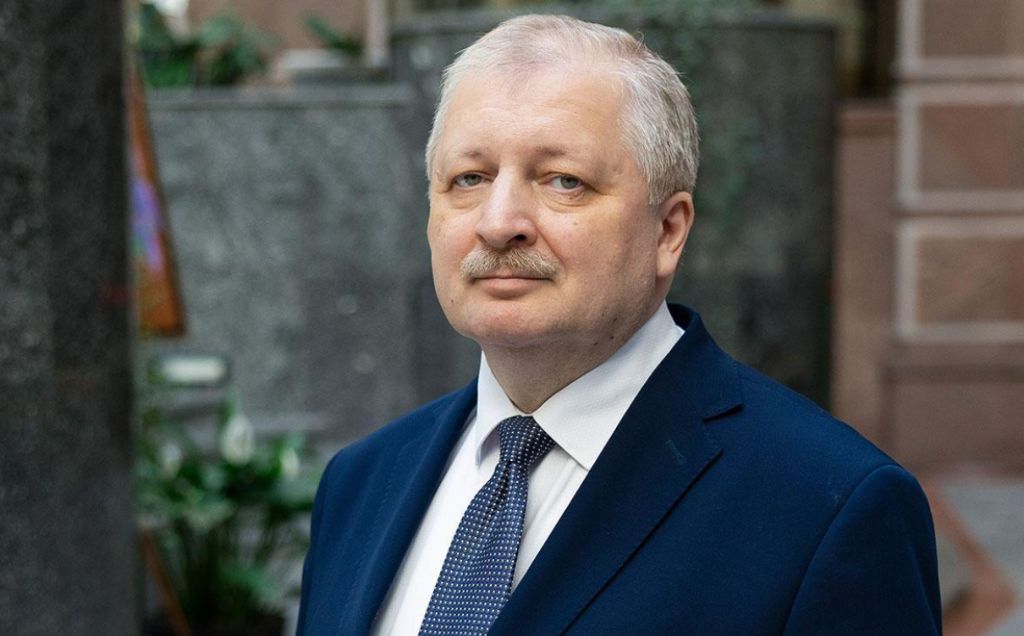
The Russian Foreign Ministry confirmed the sudden death of Ambassador Alexandre Dartchiev to the United States on November 11, 2025, at the age of 66. The announcement sent immediate ripples through diplomatic circles, arriving during a period of heightened tensions between Moscow and Washington.
Who was Alexandre Dartchiev?
Alexandre Dartchiev was no ordinary diplomat. A seasoned expert in Russian-American relations, he spent decades navigating the complexities of high-stakes diplomacy. Prior to his posting in Washington, he served as Russia’s ambassador to Canada from 2014 to 2021, where he built deep knowledge of North American political dynamics.
His appointment to Washington in March 2025 was widely seen as a strategic move by the Kremlin to restore communication channels with the U.S. administration, particularly under President Donald Trump’s second term. Dartchiev’s deep understanding of American institutions made him a key figure in efforts to manage escalating disputes over sanctions, security, and arms control.
Why this sudden loss matters at a critical moment
The timing of Dartchiev’s death could not be more consequential. With the war in Ukraine ongoing and European security at stake, the U.S.-Russia relationship remains one of the most volatile fault lines in global politics. His presence in Washington was critical not only for maintaining diplomatic continuity but also for signaling Moscow’s readiness—or reluctance—to engage in dialogue.
His passing raises immediate questions about Russia’s ability to sustain its diplomatic mission in the face of Washington’s evolving stance. The absence of a clear successor or public timeline for appointment leaves a leadership void during a period where miscommunication or misstep could further strain relations.
Diplomatic vacuum at a fragile crossroads
Dartchiev’s role extended beyond representation. As a bridge between two increasingly isolated powers, he was responsible for interpreting Washington’s priorities and conveying Moscow’s red lines—both publicly and through backchannels. His disappearance not only removes a key negotiator but also strips the Russian mission of a voice with deep institutional credibility in both capitals.
While the Kremlin has stated he died of unspecified chronic illness in Moscow, the lack of transparency has fueled speculation. Officials confirmed no suspicious circumstances, but in an era of intensified espionage concerns and geopolitical maneuvering, every detail is scrutinized.
Immediate implications for Russian diplomacy
In the short term, the Russian Embassy in Washington will continue operations under acting leadership. However, the longer-term implications are more significant:
- Leadership transition timing: The delay in naming a successor could signal internal debates within the Kremlin over the future direction of U.S. relations.
- Diplomatic messaging: Without Dartchiev’s nuanced understanding of Washington’s political landscape, Moscow risks sending mixed signals or being misread.
- Western perceptions: Allies and adversaries alike will monitor Russia’s next move, interpreting the appointment—or lack thereof—as a reflection of its strategic priorities.
The vacancy also calls into question Russia’s ability to sustain dialogue amid ongoing sanctions, military posturing, and conflicting narratives about the Ukrainian conflict. Whether the Kremlin views this as an opportunity to recalibrate its approach or doubles down on confrontation remains to be seen.
A lasting impact on global power dynamics?
Ambassadors are often seen as mere figureheads, but in high-pressure bilateral relationships, they serve as real-time crisis managers. Dartchiev’s death strips Russia of a diplomat who understood both the formal and informal channels of communication necessary to navigate U.S. politics.
For Washington, his absence removes a known quantity—someone who had survived previous shifts in U.S. policy and maintained lines of communication even during periods of maximal tension. His successor will inherit not only his portfolio but also the challenge of rebuilding trust in a relationship that has eroded significantly over the past decade.
For now, the international community watches closely. The absence of an ambassador is more than a personnel issue—it’s a reflection of Russia’s current diplomatic capacity and willingness to engage with a skeptical White House.