The ninth edition of the Paris Peace Forum, held on November 10 and 11, 2026, provided a critical platform for nations to address pressing global challenges. Among the key participants were Senegal, led by President Bassirou Diomaye Faye, and Benin, represented by Minister of Digital Transformation and Innovation Mahuna Akplogan. Their presence underscored Africa’s growing ambition to shape international discourse on peace, sovereignty, and global governance.
Paris became the epicenter of diplomatic dialogue as heads of state, government officials, international organization representatives, and civil society leaders converged to tackle crises destabilizing the global order. With conflicts raging, geopolitical tensions escalating, and technological disruptions reshaping economies, the forum served as a vital space for cross-border collaboration beyond Europe’s borders.
Senegal’s diplomatic agenda: sovereignty and security at the forefront
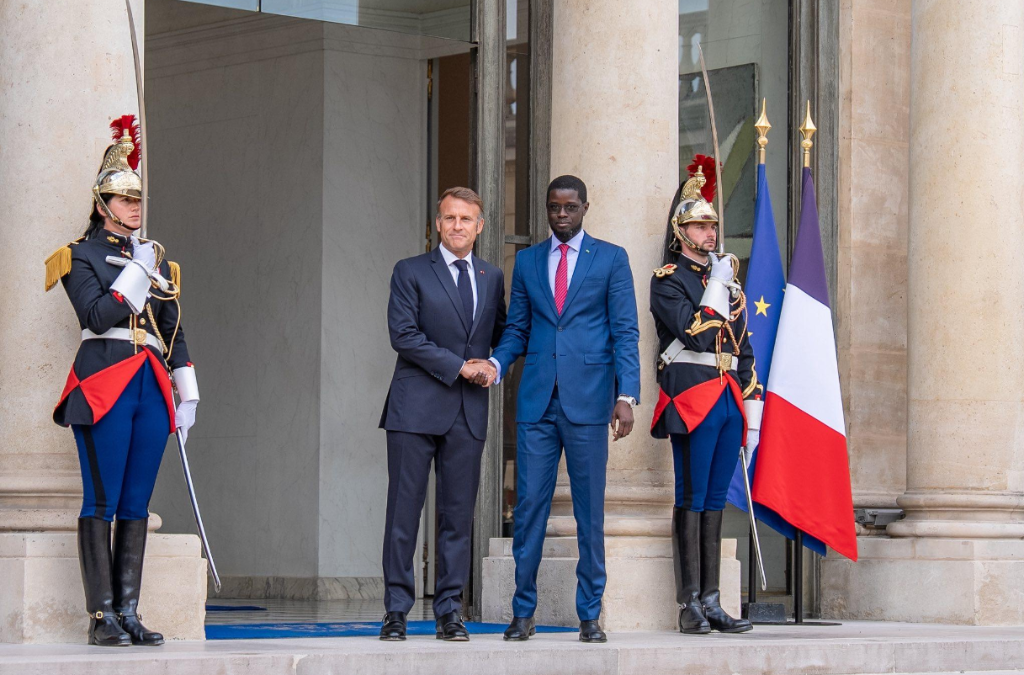
President Bassirou Diomaye Faye’s participation in the forum followed a high-profile meeting with French President Emmanuel Macron at the Élysée Palace on November 9. The Senegalese leader’s presence highlighted Dakar’s commitment to redefining its role in global affairs, emphasizing cooperation rooted in mutual respect and Africa’s strategic priorities.
The delegation from Senegal arrived with a clear agenda: to elevate African voices in discussions on the Sahel’s security, counterterrorism efforts, sustainable development financing, and reforms to global governance structures. Dakar’s strategy goes beyond mere participation—it seeks to actively influence decisions shaping Africa’s future within multilateral institutions.
The talks between Faye and Macron also reinforced bilateral ties, focusing on economic cooperation, sovereignty, and equitable partnership dynamics. These discussions reflect a broader shift in Franco-African relations, where African nations are increasingly asserting their demands for fairer engagement.
Benin champions digital sovereignty as a pillar of African influence
Benin’s representation at the forum was spearheaded by Mahuna Akplogan, Minister of Digital Transformation and Innovation, who also oversees the country’s National AI Strategy. His participation brought a critical dimension to Africa’s diplomatic efforts: the strategic importance of technological sovereignty.
While traditional peace discussions often revolve around military and security concerns, Benin’s presence underscored the rising relevance of digital infrastructure, data governance, and artificial intelligence. For African nations, reducing dependence on foreign tech solutions is no longer optional—it’s essential for economic resilience and long-term competitiveness.
The minister’s engagement centered on how Africa can harness digital innovation to drive development, reduce inequalities, and ensure that technological advancements serve local economies. His contributions framed digital sovereignty as a cornerstone of 21st-century diplomacy, extending beyond political alliances to include economic and technological empowerment.
Paris Peace Forum 2026: a global stage for diverse voices
The forum’s international scope extended far beyond Europe, with leaders from across the globe attending. Key participants included:
- Emmanuel Macron (France)
- Bassirou Diomaye Faye (Senegal)
- José Manuel Ramos-Horta (Timor-Leste)
- Gitanas Nausėda (Lithuania)
- Peter Pellegrini (Slovakia)
- Nikol Pachinian (Armenia, represented by the Prime Minister)
Additionally, representatives from Bulgaria, North Macedonia, Serbia, the Seychelles, the United Arab Emirates, Haiti, and Spain contributed to the discussions. This diversity highlighted the forum’s role in addressing challenges that transcend regional boundaries, from climate change and economic instability to technological disruption and geopolitical rivalries.
Africa’s moment: from dialogue to decisive action
Africa’s participation in the forum was not merely symbolic—it was a strategic move to assert the continent’s agency in global affairs. With a young, dynamic population, abundant natural resources, and significant economic potential, Africa holds the keys to addressing some of the world’s most pressing issues. Yet, realizing this potential requires more than representation; it demands tangible outcomes.
The delegations from Senegal and Benin embodied two complementary pillars of Africa’s ambitions: political leadership and technological innovation. Their goal was clear—to transform discussions into actionable commitments that align with Africa’s priorities, from security and development to digital transformation and fair governance.
The Paris Peace Forum 2026 served as a reminder: the future of global peace, sovereignty, and governance cannot be shaped without Africa’s full and active involvement. The continent is no longer content to be a passive participant in decisions affecting its future. Instead, it is demanding a seat at the table—and a voice in defining the solutions.