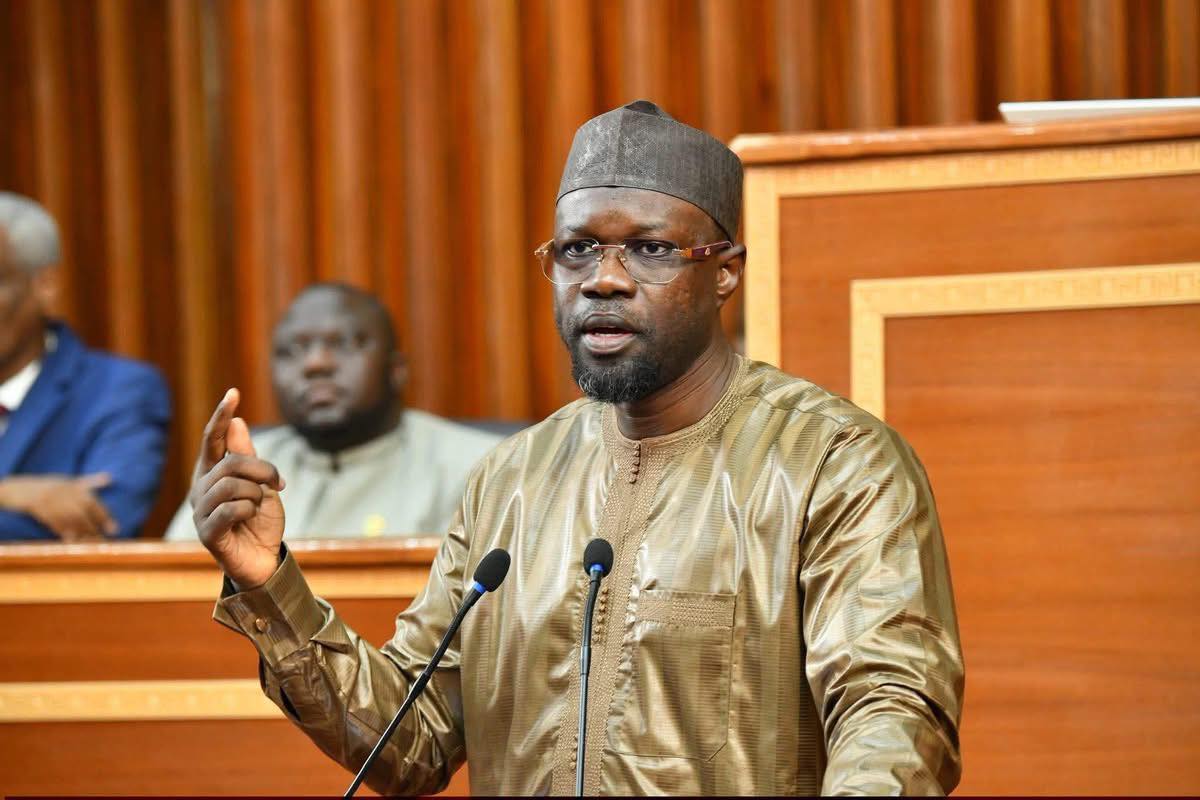
In a series of political maneuvers that appear meticulously planned, Ousmane Sonko has ascended to the presidency of Senegal’s National Assembly, raising questions about the nation’s institutional stability. Following his abrupt removal from prior roles, his swift return to the political spotlight has left observers questioning the sequence of events.
The timing of his appointment has sparked particular interest. Just after his dismissal from government, the sitting assembly president resigned without explanation, paving the way for Sonko’s unexpected takeover. Within a matter of days, the former opposition figure found himself occupying the pivotal position of President of the National Assembly (PAN). To his critics, the maneuver is unmistakable: the new leader now wields significant control over the legislative machinery.
Legislative power as a weapon
The shift in leadership marks a deliberate move by Sonko to challenge the executive branch. By securing control over the legislative agenda, lawmaking, and budgetary processes, he now possesses a formidable tool to obstruct government operations. Political analysts warn of the risks ahead.
« This is no longer standard politics; it is a calculated bid to cripple the state’s functioning, » remarked one policy expert, requesting anonymity. « The battle for institutional dominance has officially begun. »
Power play or genuine reform?
Opponents portray Sonko as a power-hungry figure, masking ambition behind a façade of revolutionary rhetoric. Once hailed as a principled outsider, his critics argue that he now mirrors the very leaders he once opposed—pragmatic in maneuvering but driven by self-interest.
His critics contend that his rise to the assembly’s helm was not an inevitable outcome of democratic processes but a calculated step toward consolidating influence. With this move, he has secured a significant institutional foothold, raising concerns about the future of Senegal’s governance.
The overarching question remains: will this shift serve the public good, or does it signal the first phase of a broader campaign to destabilize the presidency? One certainty persists—the realignment of political forces has set the stage for a prolonged struggle over institutional control.