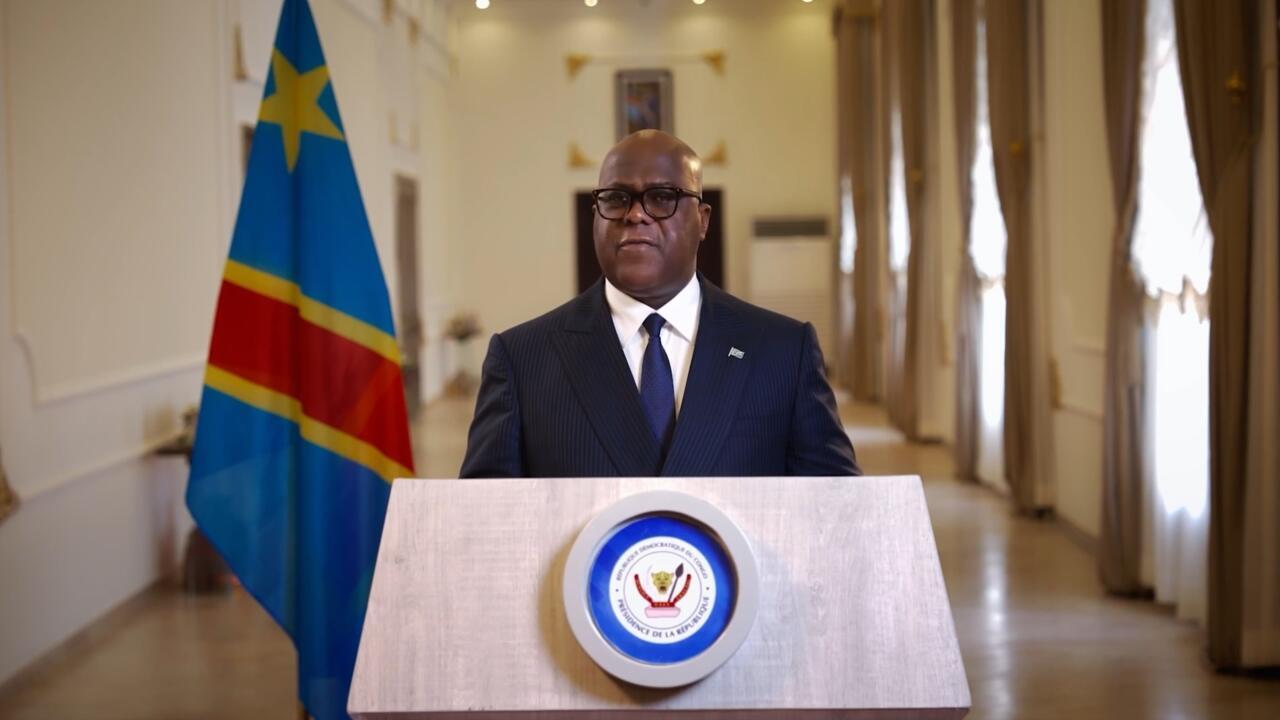
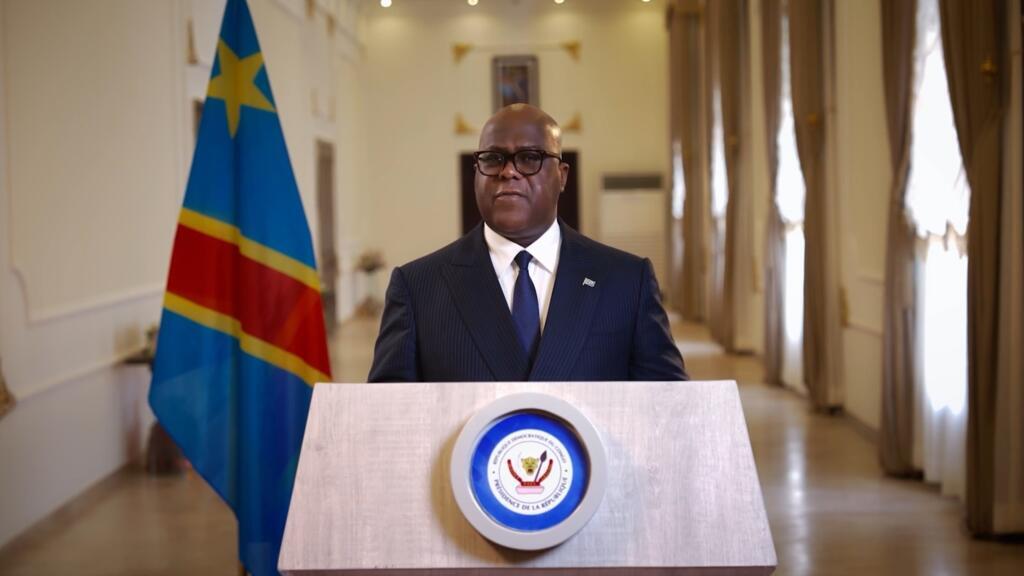
The suspense surrounding the Democratic Republic of Congo’s political future has intensified following a crucial decision by the Constitutional Court in Kinshasa. The court recently declared the law pertaining to the organization of a referendum in the DRC to be in compliance with the Constitution. This ruling has immediately reignited a profound and divisive debate within the Congolese political landscape.
Many in the opposition fear this new law could pave the way for a constitutional overhaul, potentially allowing the current head of state, Félix Tshisekedi, to extend his tenure in power. Conversely, the presidential camp vehemently rejects this interpretation, asserting that the proposed reforms are solely aimed at enhancing the operational efficiency of state institutions.
President Félix Tshisekedi, 63, who assumed office in 2019, is approaching the conclusion of his second term in late 2028. The existing Congolese Constitution explicitly states that the number and duration of presidential terms are immutable and cannot be subjected to any revision. However, during a rare press conference in early May, President Tshisekedi declared that he had not actively pursued a third term, yet he also stated, “If the people wish for me to have a third term, I will accept.” This statement has fueled much of the ongoing speculation.
Opposition stands firm against constitutional changes
With the Constitutional Court’s validation, a significant hurdle has been cleared. President Félix Tshisekedi now possesses the authority to promulgate the referendum law, which has already received approval from both the National Assembly and the Senate. This development has galvanized the opposition, which views the promulgation of the referendum law as a direct precursor to a constitutional revision that could enable President Tshisekedi to reset his term count and seek another mandate.
The opposition considers such an eventuality unacceptable and has been actively mobilizing for weeks to thwart any attempts at constitutional amendment. While the Congolese government has offered no official justification for the opposition’s deep mistrust, President Tshisekedi’s previous remarks about accepting a third term if offered by the populace continue to fuel these concerns.
The influential Catholic Church also weighs in
Adding another powerful voice to the debate, the highly influential Catholic Church in the DRC has also spoken out against any constitutional modifications. The Conférence Épiscopale Nationale du Congo (Cenco), representing bishops from across all provinces, issued an unequivocal statement asserting that they perceive “neither the necessity, nor the urgency, nor the opportunity to modify the Constitution.” This declaration serves as a clear repudiation of any efforts to alter the constitution to facilitate a third presidential term.
The Congolese prelates have maintained a consistent stance, echoing their actions in 2018 when numerous church-inspired demonstrations sought to dissuade then-President Joseph Kabila from seeking a third term, which would have violated constitutional limits. At that time, facing significant public pressure, international condemnation, and threats of sanctions, Joseph Kabila ultimately relented, albeit with apparent reluctance.
The elusive political dialogue
It remains possible that the contentious constitutional debate could be addressed during a political dialogue anticipated in the coming weeks. However, many uncertainties surround this potential dialogue. President Tshisekedi has tasked various religious denominations with organizing this political forum, but its precise scope and genuinely inclusive nature are still undefined. Key questions remain, such as whether all stakeholders in the Congolese crisis, including former President Kabila, will participate.
Furthermore, a clear divergence in thematic focus exists between the government, which prioritizes national cohesion against Rwandan aggression, and the opposition, which is staunchly focused on preserving the Constitution. The head of state has expressed a desire to discuss “all questions of national interest,” suggesting that the constitutional debate would not be off-limits. Nevertheless, observers caution that such dialogues can often be exploited by incumbent powers to weaken opposition factions through offers of yet another power-sharing arrangement.