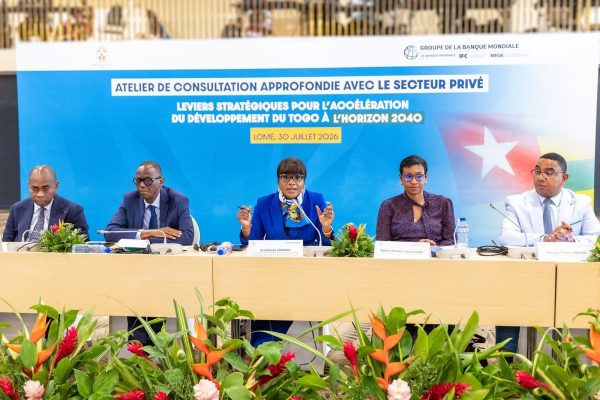
Lomé, 31 July 2026 — The Republic of Togo is placing the private sector at the heart of its long-term economic ambitions. On Thursday, 30 July, authorities in Lomé convened key economic stakeholders to discuss how to position investors and businesses as central pillars in the country’s anticipated economic transformation.
The workshop, focused on Vision Togo 2040 and the government’s 2026-2031 roadmap, brought together representatives from the World Bank Group, the national employers’ federation, the chamber of commerce and industry, leading Togolese enterprises, and international experts. The session was opened by Sandra Ablamba Johnson, Secretary-General of the Presidency, acting on behalf of President Faure Essozimna Gnassingbé.
Transforming ambition into economic reality
The discussions centred on a bold vision: doubling the average standard of living by 2040 and reducing poverty to below 15%. Achieving these targets, government officials stressed, will require more than public investment alone. It demands stronger private sector participation, increased capital flows, and a supportive business environment that fosters job creation and enterprise growth.
Government leaders acknowledged a clear truth: sustainable economic transformation cannot be achieved through state resources alone. Private investment, innovation, and entrepreneurship are essential to drive productivity, expand industries, and uplift communities across the country.
From vision to actionable strategy
The workshop was not just about setting goals—it was about laying the groundwork for real progress. Participants explored how to shift the private sector from a peripheral role to a strategic partner in public policy. Key focus areas included improving investment conditions, strengthening local businesses, and unlocking new avenues for capital and productive activity.
With the participation of the World Bank and international advisors, the dialogue took on a global dimension. Comparative insights from other economies offered valuable perspectives, helping to refine Togo’s approach and ensure its policies align with best practices in economic development.
Private enterprise as the engine of progress
The message from Lomé was unequivocal: Togo’s future prosperity depends on empowering the private sector. The 2040 vision is not just a plan on paper—it is a call to action. For the country to meet its social and economic goals, businesses must lead the way in investment, innovation, and sustainable growth.
For policymakers, the challenge now is clear: turning ambition into effective policy, and policy into tangible results. Only then will Togo’s long-term objectives move from aspiration to achievement, reshaping the nation’s economic landscape for generations to come.