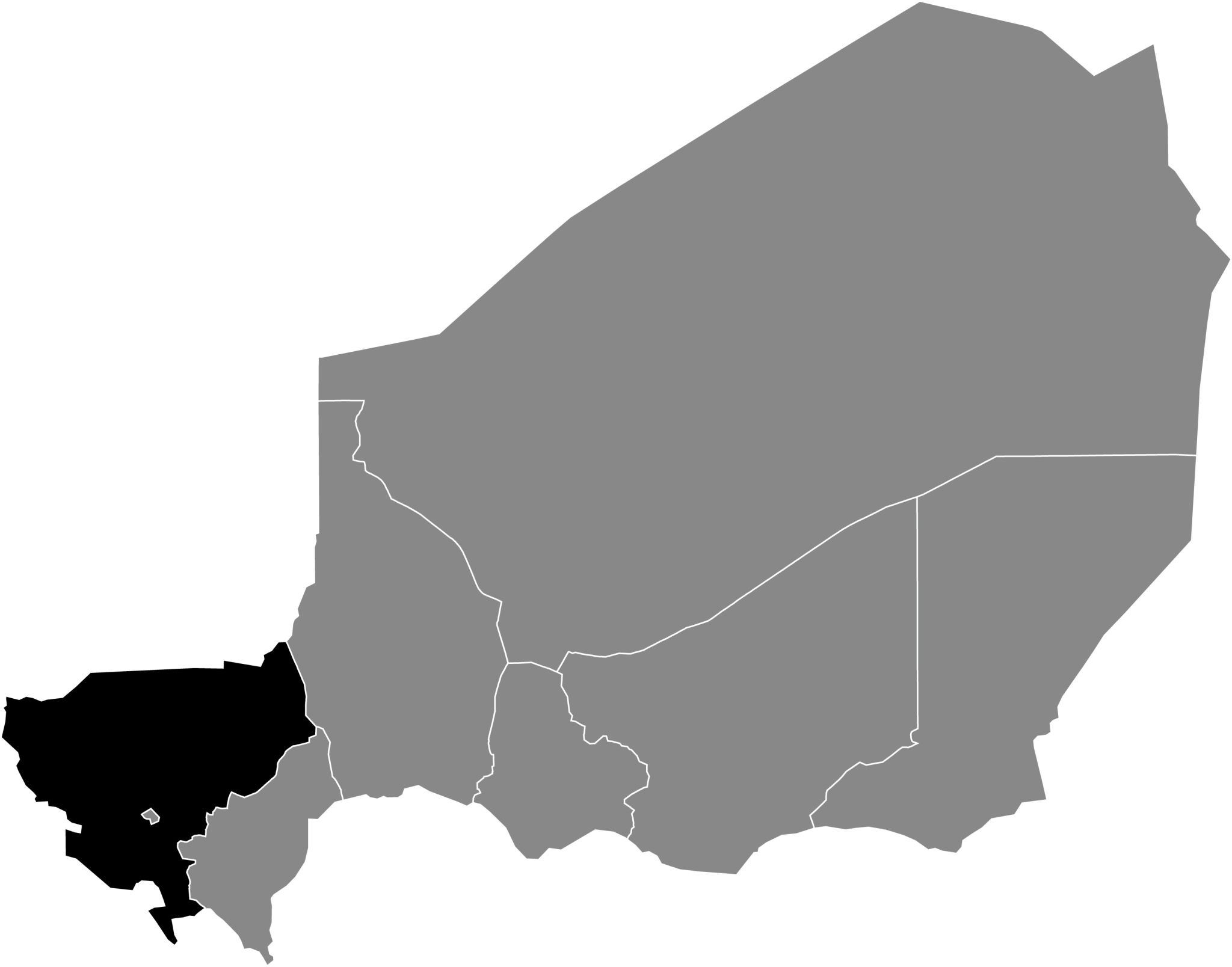
What should have been a solemn moment of remembrance and community solidarity tragically turned into a scene of carnage. On July 24, in the village of Chinagodrar, located in the northern Tillabéri region, a funeral ceremony was brutally interrupted by two drone strikes, attributed to the Nigerien armed forces. According to multiple local accounts, the bombardments targeted a gathering of villagers who had come to support a grieving family, resulting in at least seven fatalities and numerous injuries.
This attack plunged an area already grappling with persistent insecurity into profound trauma. Residents describe scenes of sheer panic, families scattering, and victims being struck down as they attempted to aid the initial casualties.
The ‘three frontiers’ region under constant military pressure
For several years, the Tillabéri region has stood as a primary flashpoint of violence across Niger. Bordering Mali and Burkina Faso, it forms part of the volatile ‘three frontiers’ zone in West Africa, an area marked by relentless clashes between security forces and various armed jihadist groups.
In response to this enduring threat, Nigerien authorities have steadily intensified their military operations, notably through the deployment of surveillance and combat drones. While these aircraft enable swift targeting of perceived hostile elements, their use in areas with significant civilian populations consistently raises critical questions regarding intelligence accuracy and the procedures for validating targets.
In villages where population movements, markets, religious ceremonies, or funerals routinely gather dozens of people, the risk of misidentification remains high when available intelligence is incomplete or insufficiently verified.
Two successive strikes exacerbate the toll
Eyewitness accounts from residents indicate that a first explosion struck the funeral gathering, triggering widespread panic. As relatives and villagers bravely attempted to evacuate the wounded and assist victims, a second strike reportedly occurred moments later, dramatically increasing the human toll.
Several injured individuals were reportedly hit during this subsequent explosion, while nearby homes also sustained damage. Survivors recount a chaotic scene, punctuated by screams, fleeing families, and the immense difficulty of organizing initial aid in an already isolated area.
A heavy human cost and families in shock
The provisional count stands at a minimum of seven dead, though local sources suggest this figure could rise due to the critical condition of several injured individuals. Among the victims were reportedly residents who had solely come to participate in the funeral, intensifying the community’s sense of incomprehension.
Beyond the immediate loss of life, this tragedy leaves families bereaved and a population deeply scarred psychologically. In a region where inhabitants already live under the constant menace of armed group attacks, this incident fuels the fear of being caught between the violence of terrorist organizations and the military operations designed to combat them.
Questions surrounding rules of engagement
This harrowing event reignites the critical debate surrounding the conditions for employing drones in counter-insurgency operations. Several observers emphasize that adherence to international humanitarian law mandates a constant distinction between military objectives and civilian populations, along with taking every possible precaution before any strike.
Human rights organizations frequently underscore that aerial operations conducted in densely populated areas demand exceptionally reliable intelligence to minimize the risk of civilian casualties.
At this juncture, Nigerien authorities have not released a detailed statement on this operation, nor have they officially confirmed the circumstances that led to these strikes. This absence of explanation fuels the inhabitants’ questions, as they await answers regarding target identification, the operational sequence, and any potential measures that might be implemented should civilian casualties be confirmed.
Trust put to the test
Beyond the human cost, this incident could have far-reaching repercussions on relations between local populations and security forces. In areas grappling with chronic insecurity, the trust of residents is a fundamental element in the fight against armed groups, particularly for intelligence sharing and cooperation with authorities.
Every incident involving civilian victims risks eroding this trust, complicating future military operations, and deepening the sense of abandonment felt by rural communities already severely impacted by years of conflict.